


Starboyy x alpha®
A 4-year-old's big football dreams, packed his way.
Tobenna Uchendu, known online as Starboyy, is a four-year-old footballer from Atlanta with an audience most grown adults would envy: over 185,000 followers on Instagram, tens of thousands more across TikTok and Threads, all watching a preschooler work on ball control, power shots, and the occasional attempted trivela in the driveway.
His family - of Nigerian, Canadian, and American heritage, run his account together, documenting everything from Pre-K graduation to visits with professional players who've taken notice of his talent, including a memorable meet-up with Galatasaray and Nigeria forward Victor Osimhen. What comes through in every clip isn't polish, it's pure, joyful obsession with the game, at an age when most kids are still working out which foot is which.
Starboyy isn't chasing virality. He's just a little boy who loves football, filmed by parents who clearly love watching him fall in love with it.
Table of Contents
- What Makes High Quality Kids Luggage for Travel Stand Out
- Durable Kids Carry-On Luggage: What to Look For
- Customizable Luggage for Kids: Personalization That Lasts
- Kids Luggage Size Requirements: Choosing the Right Dimensions
- Top Kids Luggage Options for Family Travel
- Maintenance and Long-Term Care for Kids Luggage
- Conclusion
Last Updated: August 19, 2026
What Makes High Quality Kids Luggage for Travel Stand Out
High quality kids luggage for travel combines durability with features designed for children's needs. Unlike generic suitcases, quality pieces account for a child's height, strength, and actual usage patterns. They need smooth-rolling wheels so a 7-year-old can push without effort, handles positioned for smaller hands, and organized compartments that let kids find what they need independently.
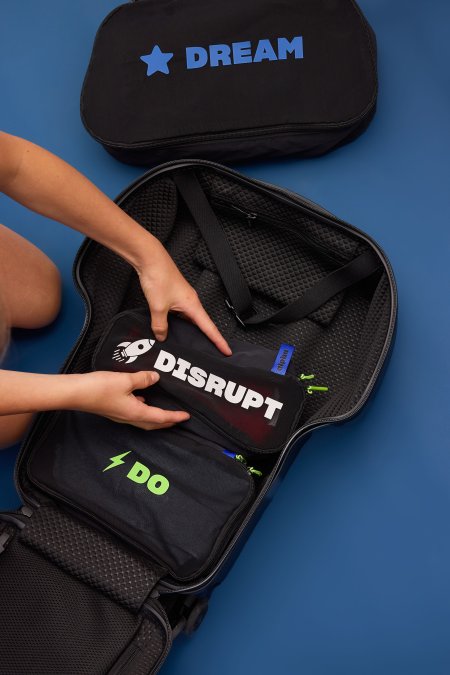
Child opening a polycarbonate shirt-shaped suitcase at an airport terminal, showing interior compartments with organized packing cubes and smooth-rolling wheels visible beneath, natural terminal lighting
Material and Build Quality
Polycarbonate has become the standard for durable kids luggage because it balances weight and impact resistance. A quality polycarbonate suitcase typically weighs 4-6 pounds empty, leaving room in checked baggage allowances for actual belongings.
Construction details matter as much as material. Look for double-stitched seams, reinforced corners, and commercial-grade zippers designed to handle repeated opening and closing without degradation. Interior lining should be durable fabric that resists tearing and staining, with dividers or compartments that prevent items from shifting during rough handling.
Wheel and Handle Performance
Smooth-rolling spinner wheels with four-wheel designs allow 360-degree rotation, giving kids better control than two-wheel models. Hinomoto wheels are a common choice in quality luggage because they handle heavy use and uneven surfaces while maintaining smooth operation.
The telescoping handle should extend and retract smoothly without jamming, with height that works for both kids pushing and parents pulling. It should lock securely in both positions.
Durable Kids Carry-On Luggage: What to Look For
Carry-on luggage designed for kids must meet airline size restrictions (approximately 22 x 14 x 9 inches) while maximizing usable space. Quality durable kids carry-on luggage weighs under 7 pounds while maintaining reinforced construction that survives repeated use.
Professional illustration showing kids luggage for travel
Polycarbonate vs. Softside Options
Polycarbonate carry-on luggage offers superior protection for fragile items and better impact resistance. The rigid construction maintains shape when packed tightly or compressed in overhead bins.
Softside luggage offers flexibility and is typically lighter, working well for kids who pack light or travel primarily with clothing. However, polycarbonate maintains its appearance and structural integrity through years of travel, making it the better long-term investment.
Weight Capacity and Long-Term Durability
Quality kids luggage typically handles 40-50 pounds when fully packed. Real durability shows up after multiple trips, zippers still work smoothly, wheels haven't degraded, and the structure hasn't warped or cracked.
The alpha® alpha® [Cabin Luggage(/products/cabin-luggage) collection | alpha.shop] uses polycarbonate construction with Hinomoto wheels engineered for kids' travel patterns. The shirt-shaped design distributes weight and impact stress more evenly than traditional rectangular suitcases.
Customizable Luggage for Kids: Personalization That Lasts
Personalization transforms luggage into something a child cares about. When kids have a say in how their luggage looks, they're more invested in taking care of it and less likely to lose it in baggage claim.
Name, Number, and Patch Customization
Patch-based customization, like the magnetic patch zones on alpha® luggage, allows kids to change personalization without damaging the bag. The best customizable luggage includes designated zones where personalization won't interfere with wheels, handles, or zippers.
Why Personalization Matters for Travel
Personalization serves practical purposes beyond self-expression. At baggage claim, a luggage tag helps identify the correct bag among dozens of similar suitcases. Kids are more careful with items they've personalized, treating "their" bag with more responsibility than generic luggage.
For families with multiple children, customization prevents mix-ups and reduces arguments about whose bag is whose.
Kids Luggage Size Requirements: Choosing the Right Dimensions
Getting the size right matters more than most parents realize. Luggage that's too large is awkward for kids to handle; luggage that's too small requires overpacking.
Carry-On vs. Checked Baggage Sizing
Carry-on luggage for kids typically measures around 20-22 inches, fitting standard airline overhead bins. This works well for trips under a week where a child packs light.
Checked baggage can be 24-28 inches, allowing more capacity for longer trips. Most families find a 20-22 inch carry-on works for kids aged 6-10 for trips up to a week, while kids aged 10-12 benefit from a 24-inch checked bag for longer journeys.
Age-Appropriate Luggage Selection
Younger kids (ages 6-8) need luggage they can physically manage. A lightweight carry-on that a child can push or pull themselves builds confidence and independence.
Kids aged 9-12 can handle larger luggage, but weight still matters. A 24-inch bag that's 6-7 pounds empty leaves room for belongings without becoming unwieldy.
For teenagers, adult-sized luggage becomes appropriate, with quality mattering even more for survival through their teens.
Top Kids Luggage Options for Family Travel
Quality kids luggage comes in different styles suited to different travel patterns and preferences.
Customizable Cabin Luggage for Bold Travelers
The alpha® Design Your Cabin Luggage is available in six solid colors: red, blue, green, yellow, black, and white. The shirt-shaped design is distinctive and memorable, with polycarbonate construction and Hinomoto wheels engineered for kids' travel.
The writable label and magnetic patch zone let kids personalize their luggage with names, numbers, or flag patches. Interior compartments help organize essentials, and the lightweight construction keeps empty weight under 7 pounds. Priced at 1385, this is designed to survive multiple children or years of regular travel.
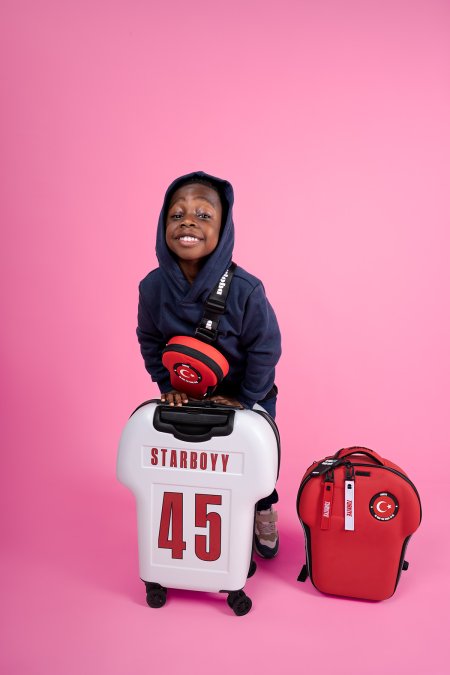
The Starboyy Signature editions, including Canada, USA, Turkiye, and Brasil, each priced at 1385, represent designer collaborations that bring distinctive style to travel.
Backpack Options for Shorter Trips
The alpha® Large Backpack (920) and Medium Backpack (720) offer alternatives for day trips and shorter journeys.
Both include writable areas and patch zones for personalization.
Maintenance and Long-Term Care for Kids Luggage
Quality luggage requires basic maintenance to keep performing well.
Cleaning and Storage Best Practices
After each trip, wipe down the exterior with a damp cloth to remove dirt and airport grime. Mild soap and water work well for polycarbonate luggage. Dry thoroughly before storing to prevent moisture accumulation.
Vacuum or wipe the interior clean, ensuring compartments are completely dry before closing. Store luggage in a cool, dry place away from direct sunlight. Keep the bag unlatched during storage to allow air circulation.
Zipper and Wheel Maintenance
Keep zippers clean by wiping along the track after each trip. If a zipper gets sticky, graphite lubricant helps without damaging the mechanism. Never force a stuck zipper.
Check wheels for debris after travel and remove it. If wheels become difficult to turn, light machine oil on the axle restores smooth operation. Extend and retract the telescoping handle occasionally during storage to keep the mechanism from seizing.
Quality kids luggage for travel is an investment in pieces built to last through years of family adventures. Alpha® has engineered luggage specifically for kids who need durable, reliable gear. Whether you choose customizable cabin luggage, a licensed team edition, or a backpack for shorter trips, focus on polycarbonate construction, Hinomoto wheels, and thoughtful interior organization. These features determine whether luggage becomes a reliable travel companion or a frustration that fails mid-journey. Get started with alpha® and give your child luggage built to survive baggage handlers, airport chaos, and years of family travel.
Frequently Asked Questions
What makes high quality kids luggage for travel different from regular backpacks?
High quality kids luggage designed for travel combines hardshell or reinforced softside materials with spinner wheels and telescoping handles for easy airport navigation. Unlike standard backpacks, travel luggage has interior compartmentalization, TSA-approved locks, and dimensions sized for overhead bins or checked baggage. The build quality—especially zipper durability and wheel construction—determines whether luggage survives repeated airport handling without breaking.
How do I know if customizable luggage for kids will hold up through a full year of travel?
Look for polycarbonate construction with reinforced corners and high-quality Hinomoto wheels that roll smoothly without catching. Check that zippers are sturdy metal rather than plastic, and that seams are reinforced. Products with writable labels and magnetic patch zones should use materials that don't degrade with repeated customization. Reading reviews from families who've used the luggage for multiple trips helps confirm real-world durability.
What are the standard kids luggage size requirements for airline carry-on?
Most airlines allow carry-on luggage up to 56 centimetres long, 45 centimetres wide, and 25 centimetres deep for children. However, requirements vary by airline, so check your specific carrier before booking. For checked baggage, children's luggage typically follows standard dimensions of 56-71 centimetres in length. Cabin luggage sized for kids is designed to fit overhead bins while remaining easy for children to handle, balancing portability with adequate packing space.
Are personalized or customizable luggage pieces worth the extra cost?
Customizable luggage for kids offers real benefits beyond aesthetics. Personalization with names and numbers makes luggage easier to identify at baggage claim, reducing loss risk. It also encourages children to take ownership of their travel gear and express individuality. When combined with durable construction—polycarbonate shells, quality wheels, and reinforced zippers—the investment pays off through multiple years of school trips, family holidays, and weekend travel.
Leer más

Find personalized school bags with names for kids. Learn what makes them durable, how to customize them, and why they prevent lost items at school.

Choose backpacks for kids: Learn how to choose the right backpack for your child with our guide to size, ergonomics, durability, and fit. Find the perfect.